

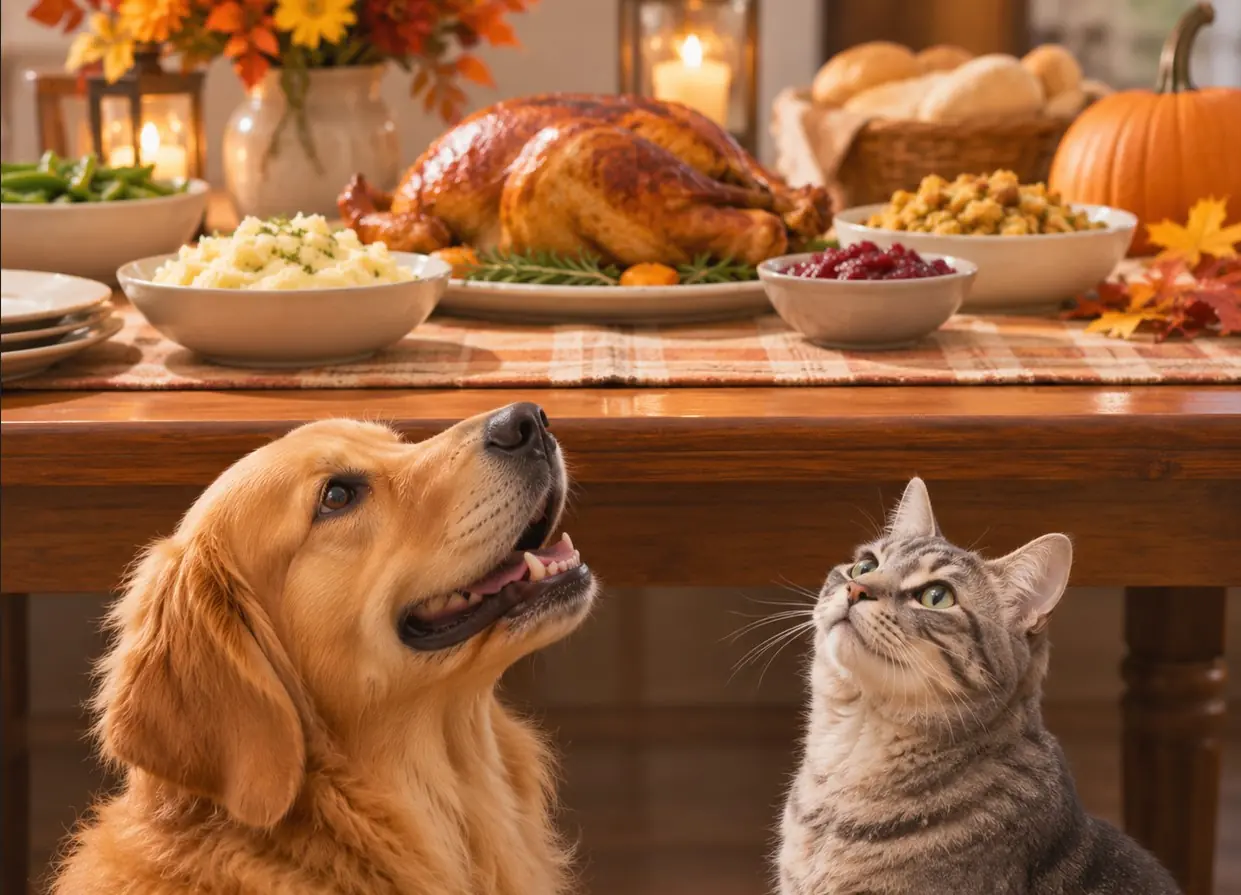
Thanksgiving is supposed to be a relaxing day filled with family, food, and a little extra time at home. But when you have pets, things don’t always go according to plan.
A dog discovers a plate of brownies. A cat gets into seasoned turkey. Someone accidentally leaves a bag of leftovers on the floor.
Suddenly, you’re wondering whether that stolen snack is harmless or something that requires immediate veterinary attention.
At Herriman Pet Vet & Emergency Hospital in Herriman, UT, we understand how stressful these situations can be. Knowing which Thanksgiving foods are dangerous and recognizing the signs of a medical emergency can help you respond quickly.
Here are six holiday food hazards every pet owner should know.
1. Chocolate Can Affect Your Pet’s Heart and Nervous System
Chocolate is a common ingredient in Thanksgiving desserts, from brownies and cookies to cakes and pies.
Unfortunately, it contains theobromine and caffeine, substances that can be toxic to dogs and cats.
The risk depends on the type of chocolate, the amount consumed, and your pet’s size.
Dark chocolate and baking chocolate are especially dangerous because they’re more concentrated.
Symptoms may include vomiting, diarrhea, restlessness, increased heart rate, tremors, or seizures.
If your pet eats chocolate, contact a veterinarian immediately. Save the packaging if possible so the veterinary team can
estimate the exposure.
2. Grapes and Raisins Can Cause Kidney Injury in Dogs
Grapes and raisins sometimes appear in stuffing, holiday breads, salads, and desserts.
In dogs, these foods can cause acute kidney injury.
One of the most concerning aspects is that the toxic amount is unpredictable.
Some dogs may develop serious complications after eating relatively small amounts.
Early symptoms can include vomiting, reduced appetite, and lethargy, but kidney injury may develop before obvious symptoms
become severe.
Any known grape or raisin ingestion in a dog requires immediate veterinary guidance.
3. Xylitol Can Cause a Dangerous Drop in Blood Sugar
Some sugar-free desserts, candies, and other packaged products contain xylitol.
In dogs, xylitol can trigger a rapid release of insulin, causing blood sugar to fall dangerously low.
Symptoms may include vomiting, weakness, trembling, loss of coordination, seizures, or collapse.
Certain exposures can also cause severe liver injury.
Because symptoms may develop quickly, suspected xylitol ingestion should be treated as an emergency.
Check ingredient labels carefully, especially on sugar-free products.
4. Onions and Garlic Can Damage Red Blood Cells
Thanksgiving stuffing, gravy, casseroles, and seasoned meats frequently contain onions or garlic.
Both ingredients can damage red blood cells in dogs and cats, potentially causing anemia.
Cats are especially sensitive.
Symptoms may include weakness, pale gums, rapid breathing, decreased appetite, or dark-colored urine.
Unlike some other poisonings, symptoms may not appear until several days after ingestion.
Raw, cooked, dried, and powdered forms can all be harmful.
If your pet consumes a concerning amount of onion or garlic, contact a veterinarian promptly.
5. Turkey Bones Can Cause Choking or Intestinal Injuries
Turkey may be the centerpiece of Thanksgiving dinner, but cooked bones should never be offered to pets.
Cooking makes bones brittle, increasing the risk that they’ll splinter.
Sharp fragments can injure the mouth, throat, stomach, or intestines.
Bones can also become lodged in the digestive tract, causing an obstruction.
Warning signs include repeated vomiting, abdominal pain, difficulty swallowing, loss of appetite, or lethargy.
If your pet swallows a turkey bone, contact a veterinarian for guidance. Do not attempt to induce vomiting.
6. Fatty Foods Can Trigger Pancreatitis
Not every Thanksgiving emergency involves a poisonous ingredient.
Rich foods such as turkey skin, gravy, butter-heavy casseroles, and greasy leftovers can cause significant digestive
problems.
In susceptible dogs, a high-fat meal can trigger pancreatitis.
Pancreatitis is inflammation of the pancreas and can range from mild to severe.
Symptoms may include persistent vomiting, abdominal pain, diarrhea, lethargy, and refusal to eat.
Some pets require hospitalization for intravenous fluids, pain management, and supportive care.
How Do You Know When It’s an Emergency?
Some symptoms require immediate veterinary evaluation.
Seek emergency veterinary care for:
- Seizures or collapse
- Difficulty breathing
- Severe weakness or disorientation
- Repeated vomiting or unproductive retching
- A swollen or severely painful abdomen
- Significant tremors
Suspected ingestion of xylitol or other potentially dangerous toxins
Even if your pet seems normal, known ingestion of grapes, raisins, or a potentially toxic amount of chocolate requires
prompt veterinary guidance.
What to Do Before Bringing Your Pet to the Emergency Vet
If your pet eats something dangerous, remove any remaining food and prevent further access.
Gather the packaging or ingredient information if available.
Try to estimate how much your pet consumed and when the incident occurred.
Contact a veterinarian or animal poison control service for instructions.
Avoid inducing vomiting or giving medications unless specifically directed by a veterinary professional.
If your pet is experiencing severe symptoms, seek emergency veterinary care immediately.
What Happens During an Emergency Visit?
Treatment depends on the food involved and your pet’s condition.
The veterinary team may recommend a physical examination, bloodwork, imaging, or monitoring of blood glucose and organ
function.
Some pets may need treatment to reduce toxin absorption when appropriate and safe.
Others may require intravenous fluids, medications, monitoring, or hospitalization.
If your pet swallowed a foreign object, additional diagnostics or procedures may be necessary.
Early veterinary evaluation can help identify complications before they become more serious.
How to Prevent Thanksgiving Food Emergencies
Keep chocolate, raisins, sugar-free desserts, and seasoned dishes away from pets.
Dispose of turkey bones in secured trash containers and refrigerate leftovers promptly.
Remind guests not to feed pets from the table.
If you’d like to share a holiday treat, offer a small portion of plain, fully cooked, boneless, skinless turkey without
seasoning.
For pets with medical conditions or sensitive stomachs, stick with veterinarian-approved foods.
Emergency Veterinary Care for Herriman Pets
Thanksgiving should be about making memories, not worrying about whether your pet needs medical attention.
But accidents happen, and knowing when to seek help is important.
At Herriman Pet Vet & Emergency Hospital in Herriman, UT, we’re committed to helping pets and their families navigate urgent health concerns, including accidental food ingestion and gastrointestinal emergencies.
If your dog or cat eats something dangerous or develops concerning symptoms, seek veterinary guidance promptly. For severe
symptoms, immediate emergency evaluation is essential.
With a little preparation and awareness, you can help keep your pet safe throughout Thanksgiving and the holiday season.